Cooking Without Photos: Mango Bread

Ohhhhhh Hawaii! Maybe someday I’ll get to go to Hawaii, until then I’ll live vicariously thru the flavorful food that lands on my plate.

When I decided I was going to try to get a cookbook from every state, I figured Hawaii and Alaska would be the hardest. Surprisingly, they were probably two of the easiest. I figure it’s because both are hugely popular vacation spots.

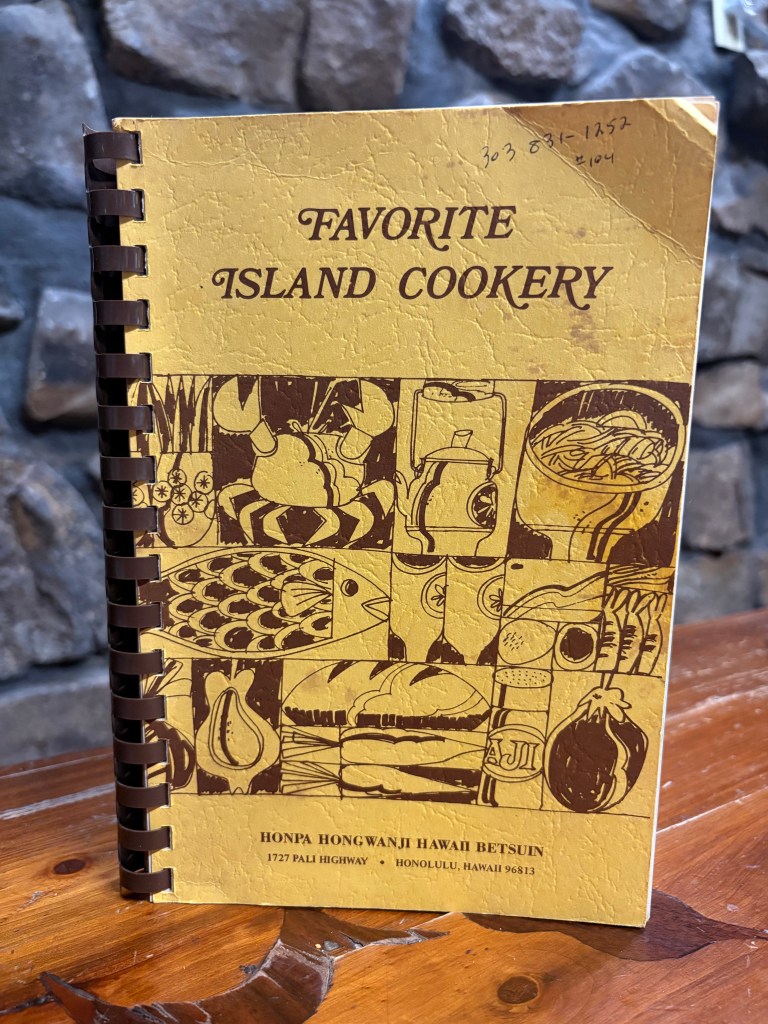
At any rate, I didn’t visit Hawaii to pick up this cookbook, but after reading about the Temple that it came from, I would love to visit it one day. “Favorite Island Cookery” was compiled by Honpa Hongwanji Hawaii Betsuin, a Buddhist Temple located in Honolulu, Hawaii.
Buddhism was first brought to Hawaii in 1889 when Japanese sugarcane laborers arrived to the island. A smaller Temple was built in 1899 and the current Temple was built in 1918.

Construction of the Temple took place during the most critical years of World War I. In order to show respect and prove Japanese Immigrants in Hawaii were loyal Americans, and fulfill the hope of acceptance of Buddhism as an American faith tradition, wooden pews, a high wooden pulpit, pipe organ, hymnals and Sunday services were instituted. This was coupled with the traditional Japanese gold and brass altar decorations centered around the priceless, centuries old, image of Amida Buddha.

Still in use today, the Temple has been through two wars, uncertainties, and stood the test of time.

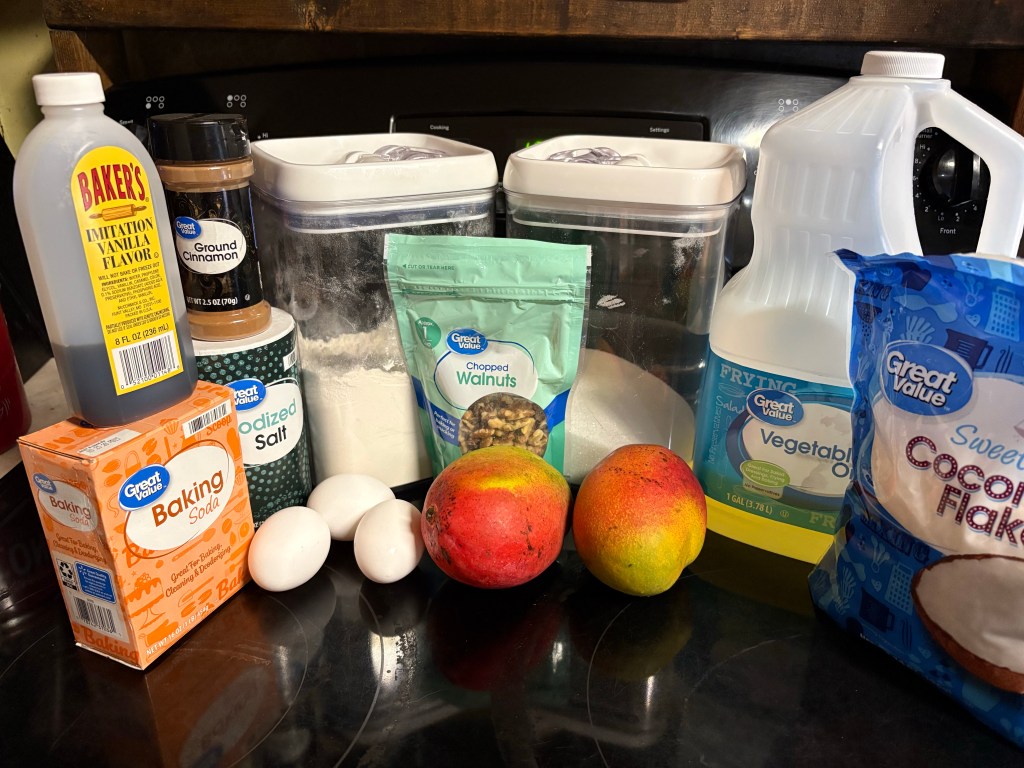
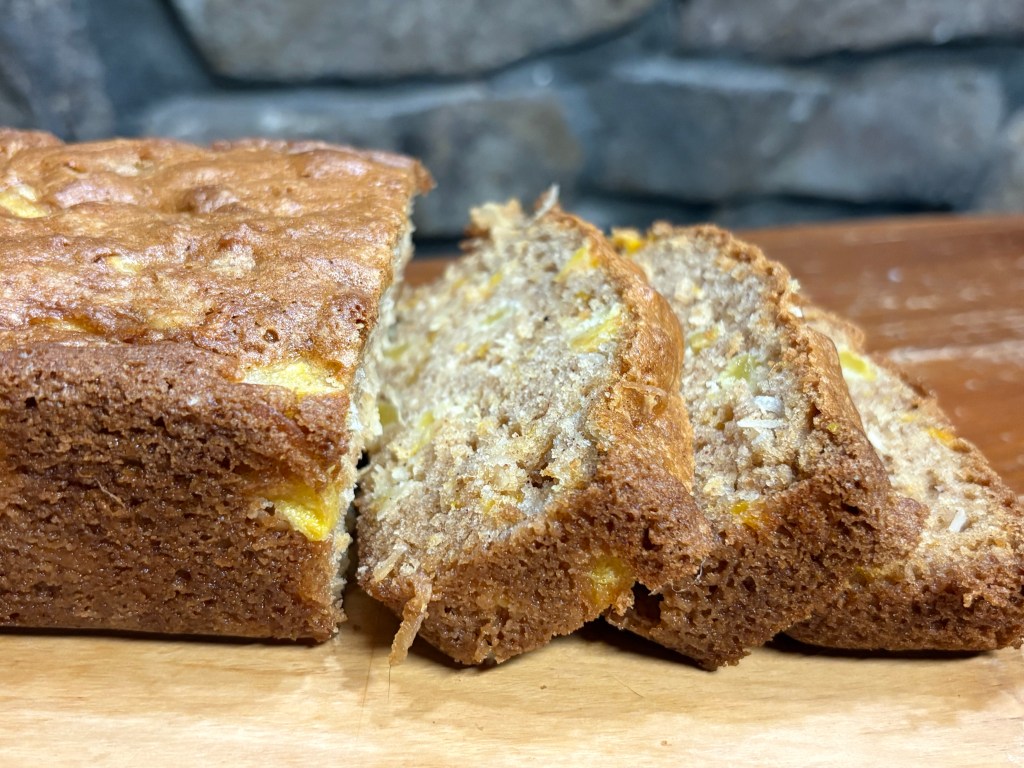
Onto the recipe! Starting with page one, there were ingredients I’ve never even heard of. Well that’s not helpful…normally, soup is my go to. Not this time. I flipped over to the breads and found a Mango Bread recipe that sounded doable. I gave it a whirl and it’s a winner!
Couple things:

  1. Mangos are in season right now and are tasting pretty fine. Caution, the riper they are, the stringer they are. Not really a problem until your husband takes a bite of the bread and is convinced there’s hair in it. You’ll win him over with the taste and he won’t care anyway.
  2. Frozen mangos are available all year. Not sure how they would work out but I’d probably try it.
  3. The batter is THICK! I’m talkin’ THICK! It’s going to be okay.
  4. It says to bake it 1 hour and I baked mine for 50 minutes. Just keep an eye on it.
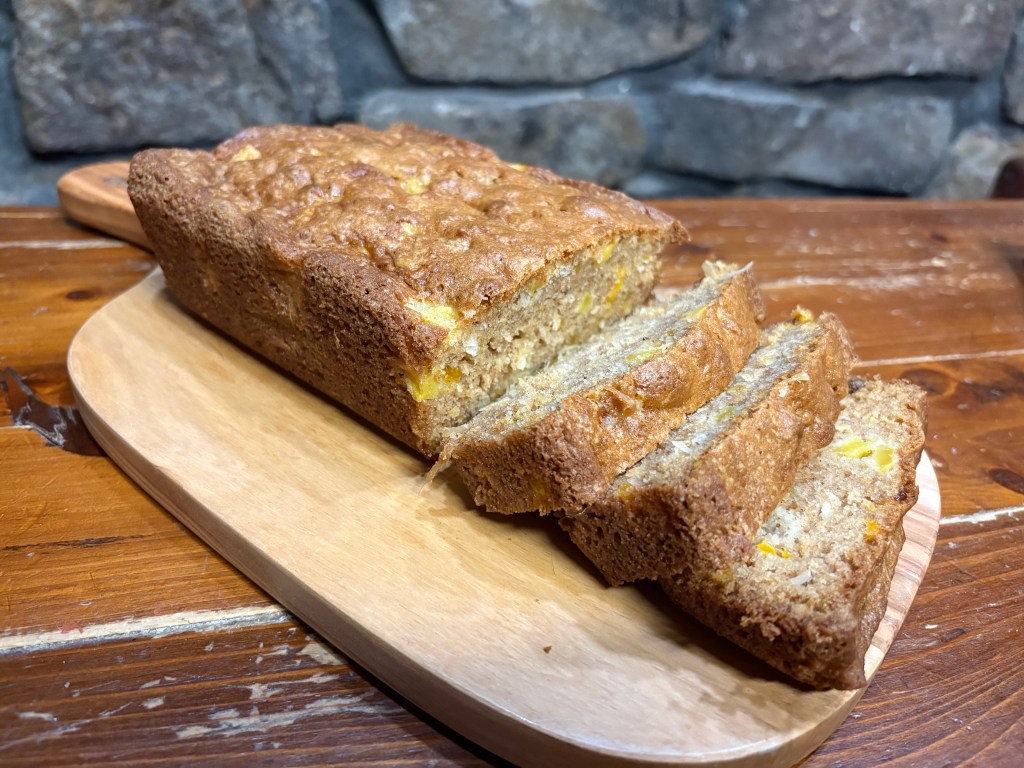
That’s really it. Tastes great! Would make a great breakfast or brunch bread. Fab!
Cooking Without Photos – Hobo Onion Steaks

They say the Devil went down to Georgia. I don’t know that for sure because I’ve never been there. I do like traveling the states via recipes though and this week we travel over to Georgia.

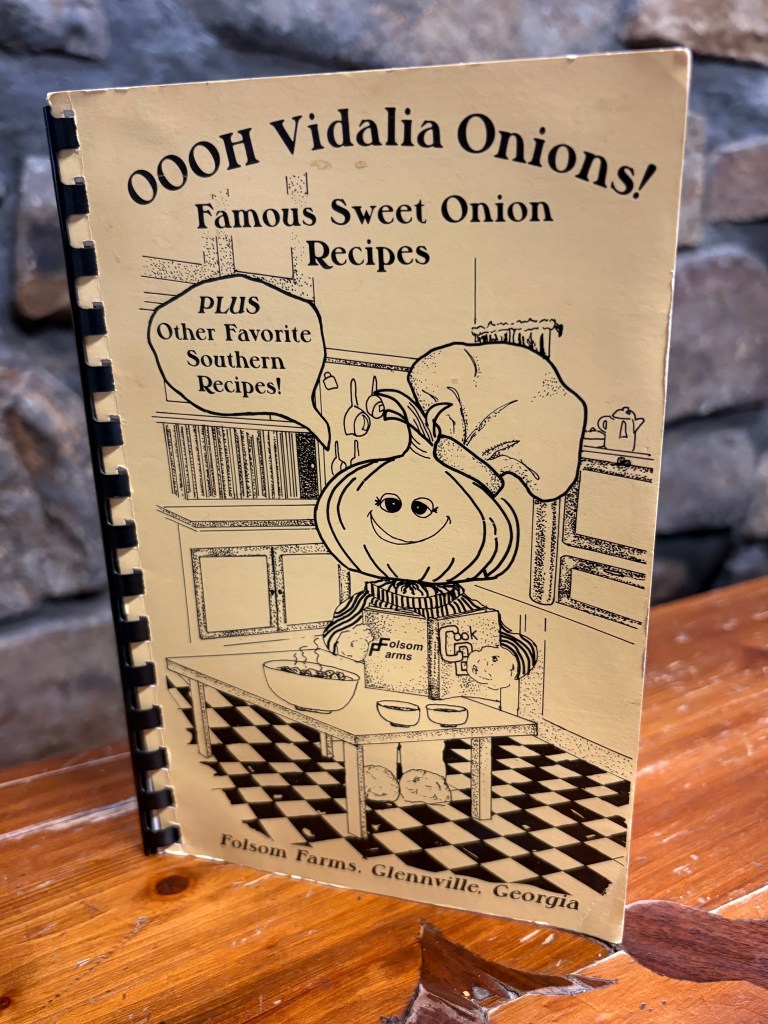
When I picked up “Oooh Vidalia Onions”, I knew it was going to be great! Little did I realize how hard it would be to find Vidalia onions in March. I’m saving some of the recipes in this small but mighty cookbook for a time when Vidalia onions are in season. Shouldn’t be too long though.

I tried to find some info about Folsom Farms, but they don’t have a website. Google had a 4.8 ⭐️ review and that’s all I needed to know. I’d totally go and have dinner there sometime, website or not. Just sounds like they are too busy making good food to keep up with a website. Nothing wrong with that.

Folsom Farms is today in the city of Glennville, GA. Glennville was founded in 1857 after several land swaps between several people and originally named Philadelphia Cross Roads. The first building in town was a church/school.

It was in 1888 that a man by the name of Glenn Thompson cam to town and became the teacher at their school. Mr. Anderson advocated for a post office and filed the proper paperwork to do so. His request was granted by the Post Office Department and a name needed to be selected because Philadelphia was already taken. The towns people chose Glennville after Glenn Anderson and all of his hard work. And the rest, as they say, is history.

Onto the recipe!
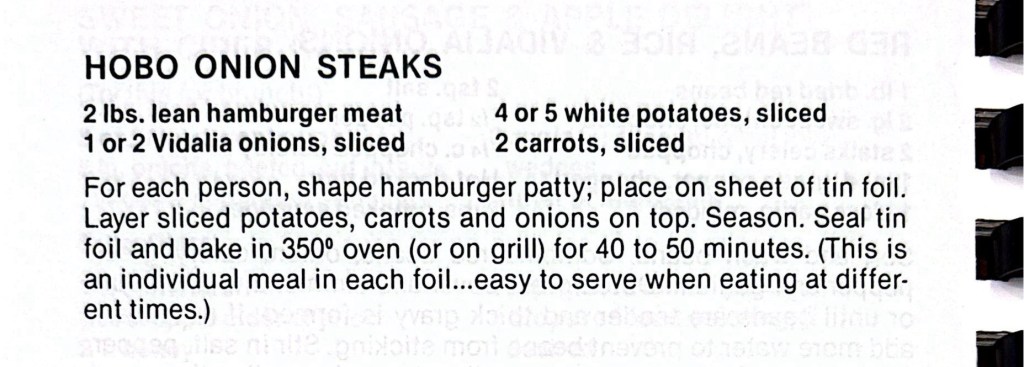
This week I chose Hobo Onion Steaks. It’s about to be camping time and this is a great one to cook outdoors or indoors.

Couple of things:

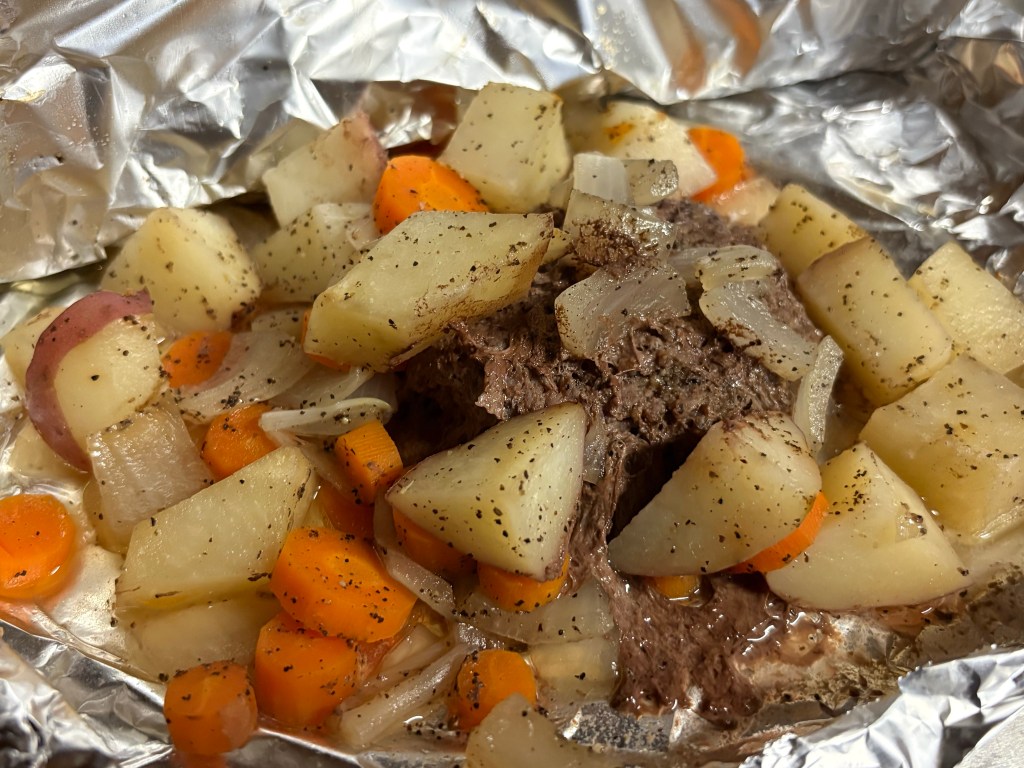
  1. It says to cook them 40-50 minutes. I went with an hour and some of the potatoes were still not completely done. Not a huge deal.
  2. I used salt, pepper and Cavenders seasoning. You could really use 1000 different combinations.
  3. When we finished eating, our youngest said this would be great with some mushrooms. No lies detected! Next time for sure!
  4. This is also something that kids can easily make.
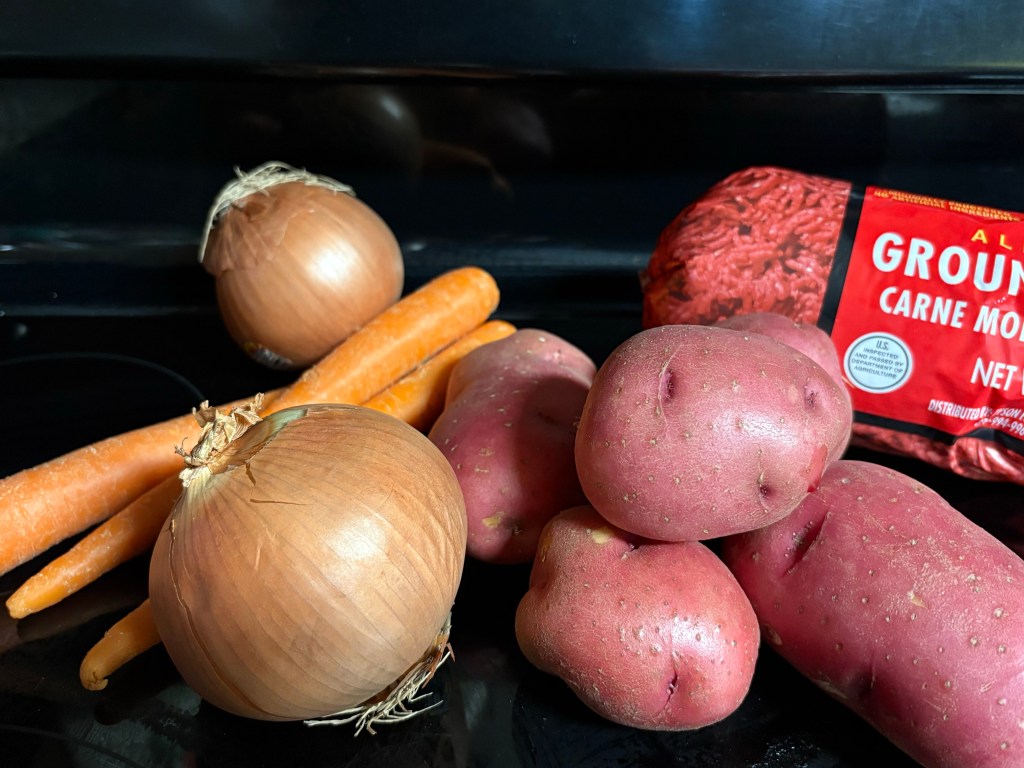
  5. I had to use regular yellow onions. Still tasted fine.

It tastes great and is super fast!

Cooking Without Photos – Pig Pickin’ Cake

Florida! The Sunshine State!

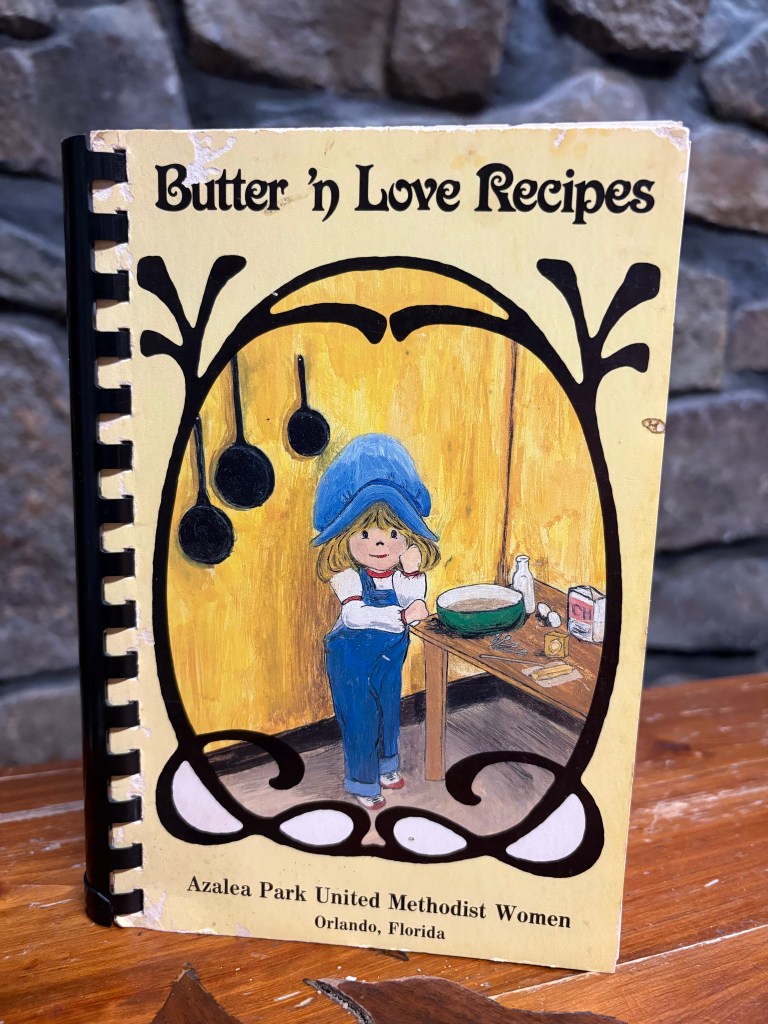
When I settled on this week’s selection, I noticed it was from Orlando, home of Disney World. I decided to look up info on Azalea Park Methodist Church and their website is down. They do have a Facebook page that is very much active, I took that as a good sign. I’ll have to make an update on this post when their page comes back up.

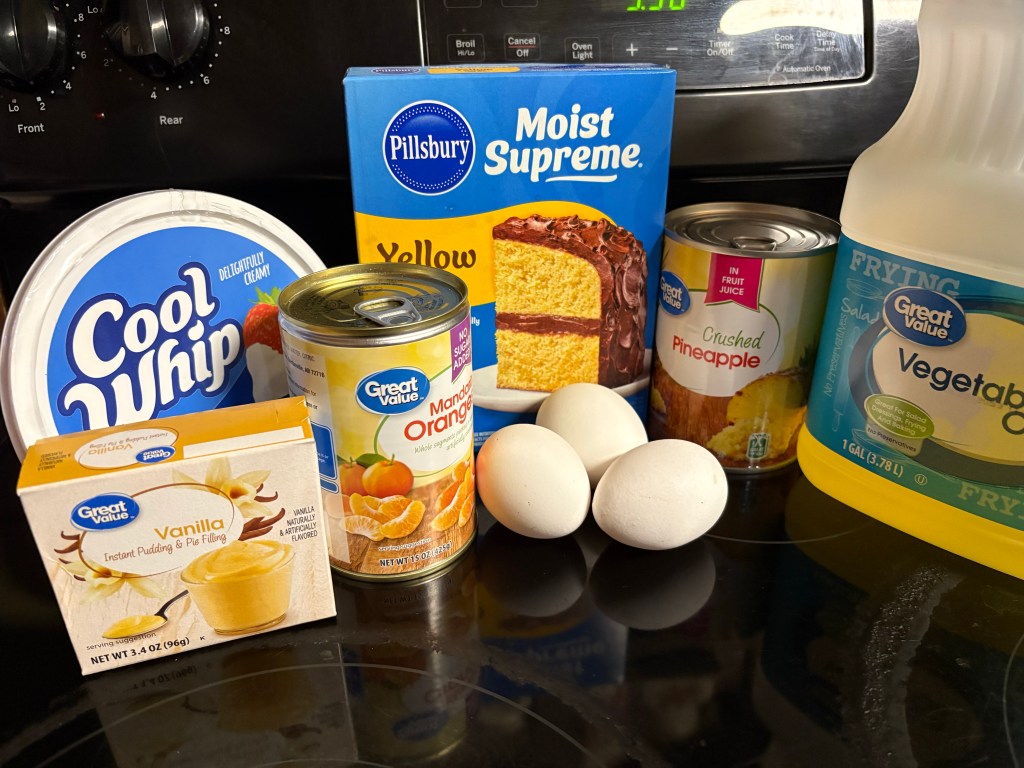
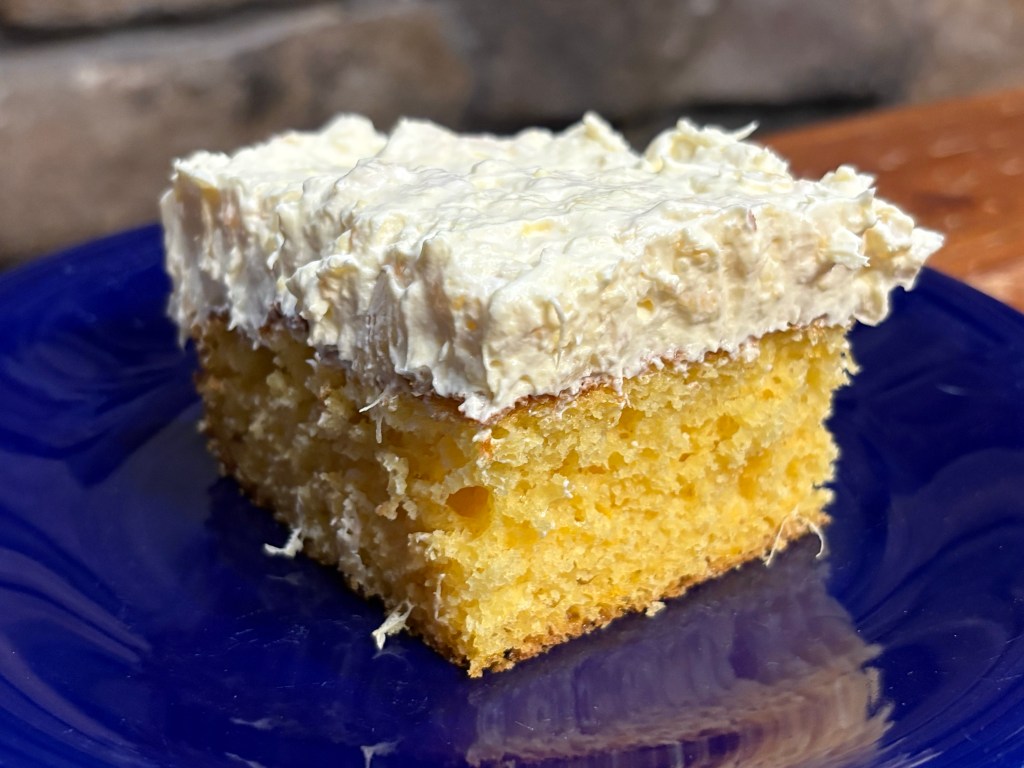
Onto the recipe! While flipping through, “Butter ‘N Love Recipes”, I stopped at a cake recipe I’ve never seen before. I decided to give the Pig Pickin’ Cake a whirl. It’s fab, y’all!

Couple of things:

  1. It doesn’t say to drain the mandarin oranges. I did.
  2. I went by box directions on the cooking time. I cooked it 5 minutes more than the suggested for a 9×13 pan. I wasn’t wrong. You’ll have a burnt cake if you cook it for an hour and your feelings will be sad.
  3. Let the cake cool before putting on the frosting.
  4. I put it in the fridge for a couple of hours before serving. It was good, but not near as good as it was the next day.

That’s it! Try it and I know you’ll love it!

Cooking Without Photos – Corn Chowder

Oh Delaware, here you are, waiting patiently for your chance in the spotlight

This week we travel to Claymont, Delaware. Claymont was originally occupied by aboriginal Indians of the Middle Wooand period who lived along Naamans Creek.

Dutch colonists arrived in tbe 17th century and named the area Naamans after the Chief of the Lenape Indians. The settlement grew rapidly. Before long, farms started popping up and the town had a gristmill.

Sitting along the Delaware River, Claymont has been a two-way thoroughfare for travel to and from Philadelphia and Washington, D.C., since colonial days.

In 1838, the Philadelphia, Wilmington and Baltimore Railroad built a station in Claymont.
The area developed from a primarily agricultural community to a suburban resort area for wealthy Philadelphia families.

In 1856, Naamans was renamed as Claymont after the Reverend John B. Clemson, pastor of the Episcopal church. He relocated here with his family from their plantation, Claymont Court, in Charles Town, West Virginia.

Today, Claymont is a town of about 10,000 people and still full of rich history all the way back when our country was just being born.

Onto the recipe! When I started this “1 recipe per state journey”, I had some gaps in my own cookbook collection that needed to be filled. Luckily, I was able to use the Intrer-Library Loan service at my library to retrieve some states that I just couldn’t put my hands on otherwise.

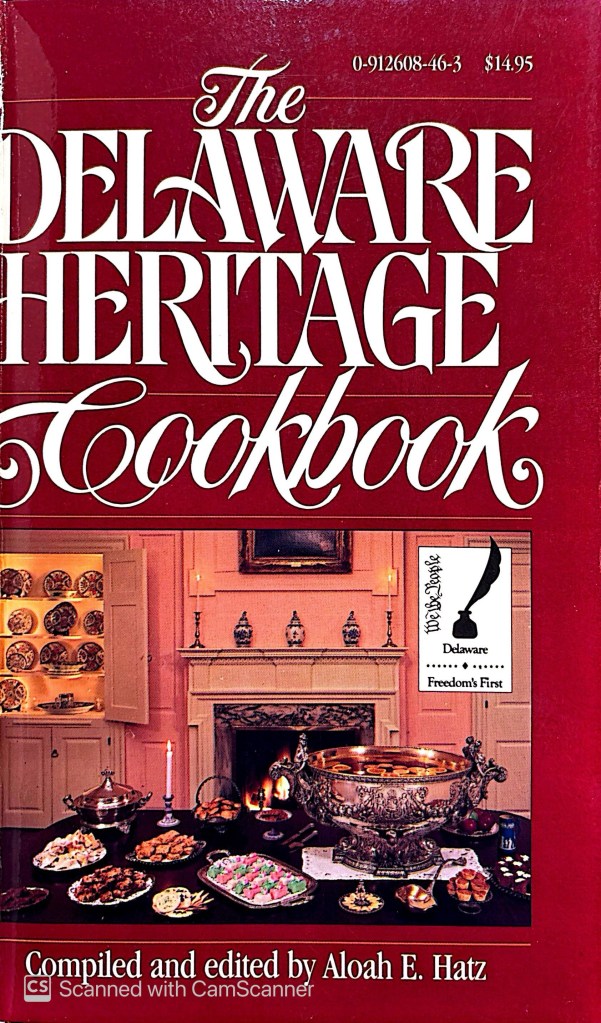
By emailing the ILL department and telling them what I was doing, they helped me locate a book that was perfect for my project. “The Delaware Heritage Cookbook” dropped in my lap and it was absolutely full of great foods to try.

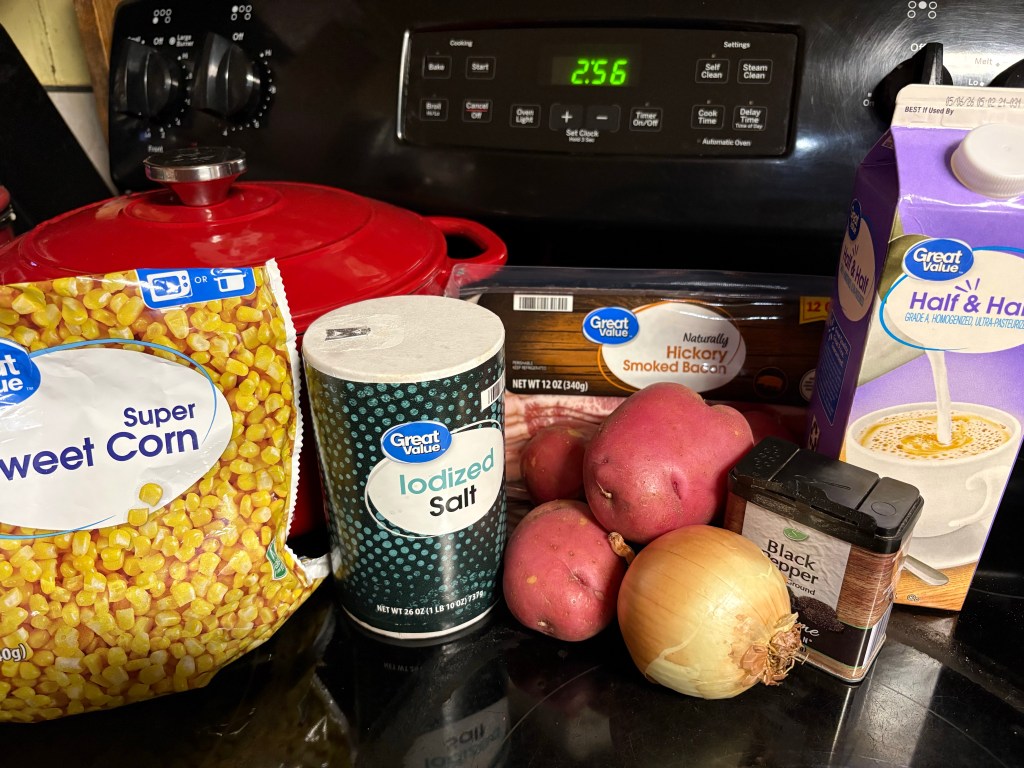
I settled on Corn Chowder. Yum!

Couple of things:

  1. I wasn’t sure what “salt pork” was so I used two pieces of bacon instead. Seemed to have worked fine.
  2. 1 cup of water wasn’t enough liquid it didn’t seem like. I added a bit more, but not cover the potatoes completely.
  3. I used red potatoes and left the skins on. I just think it looks pretty and it adds color.
  4. I threw in some thyme. I just love how it makes things taste. If you don’t want it in there, don’t put it in there. Simple!

This was great! We had it with cornbread, but crackers would also be wonderful!